Choosing a truck rental is about more than deciding how much weight needs to move.
A business transporting boxed stock has very different requirements from a construction company moving pallets, pipes, timber or bulky equipment. The truck body can affect how easily the vehicle is loaded, how well the cargo is protected and how efficiently goods can be delivered.
As South African businesses prepare for spring projects and the busier final months of the year, understanding the difference between a closed truck and a dropside truck can help prevent an expensive mismatch.
When Does a Closed Truck Make Sense?
A closed-body truck provides an enclosed load area, making it useful when goods need additional protection while being transported.
This can include boxed products, packaged stock, furniture, business equipment or goods that should not be unnecessarily exposed to rain, dust or direct sunlight.
A closed truck can also be practical for businesses making several deliveries in one day. Products remain contained within the load area between stops rather than being openly visible.
For certain loads, protection is just as important as capacity.
Before booking, businesses should consider not only the size and weight of the cargo, but also whether the goods can safely travel in an open load area.
Why Choose a Dropside Truck?
A dropside truck is designed around easier access to the load area.
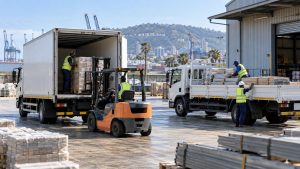
The sides can be lowered, making it easier to load and unload large, awkward or heavy items from different positions.
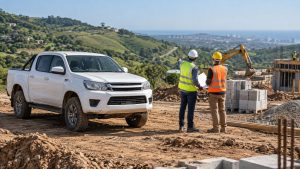
This can be especially useful for construction companies, contractors, landscaping businesses, industrial operations and other businesses transporting materials that do not fit neatly into boxes.
Pallets, building materials, long items and certain types of equipment may be easier to handle when the loading team is not limited to a rear opening.
Where forklifts or other loading equipment are involved, side access may also improve efficiency depending on the site.
The compromise is that an open load area provides less protection from weather and road exposure.
Size Still Matters
Choosing between closed and dropside is only the first decision.
The truck also needs to have enough capacity for the load without being unnecessarily large.
A truck that is too small can result in additional journeys, more kilometres, higher fuel usage and lost time.
Hiring far more capacity than required may also be inefficient. A larger truck can be more difficult to manoeuvre around restricted sites, loading bays or busy delivery locations.
Before contacting Paragon Van, Car & Truck Rental, prepare basic information about the approximate weight and dimensions of the load, how it will be loaded, the number of trips required and where the vehicle needs to travel.
This helps narrow down the most practical option.
Look at the Collection and Delivery Points
The load itself is only part of the equation.
A warehouse with a dedicated loading bay is very different from an active construction site. Delivering packaged stock to a retailer is different from unloading timber or building materials into an open yard.
Consider whether there is enough room around the truck, whether loading equipment will be used and whether the cargo will remain in the vehicle for any extended period.
These details often determine whether a closed truck or dropside truck will be easier to work with.
Choose the Truck Around the Job
There is no single truck type that suits every business requirement.
A closed truck generally works better when protection and enclosed transport are the priorities. A dropside truck is often more practical when easy loading access and bulky cargo are more important.
Paragon Van, Car & Truck Rental offers commercial truck rental options for a range of business requirements, allowing companies to choose around the load rather than forcing the load into the wrong vehicle.
Before requesting a quote from Paragon Van, Car & Truck Rental, provide clear information about what is being transported, where it needs to go and how it will be loaded.
The better the information at the start, the easier it becomes to choose the right truck for the job.